
Products
Amine Solutions and Supporting Products for Efficient Gas Treating
GP GasPack focuses on amine gas sweetening, supported by chemicals and technologies that help maintain solvent health, unit reliability, and overall performance.


Products
Amine Solutions and Supporting Products for Efficient Gas Treating
GP GasPack focuses on amine gas sweetening, supported by chemicals and technologies that help maintain solvent health, unit reliability, and overall performance.
Engineered Product Lines



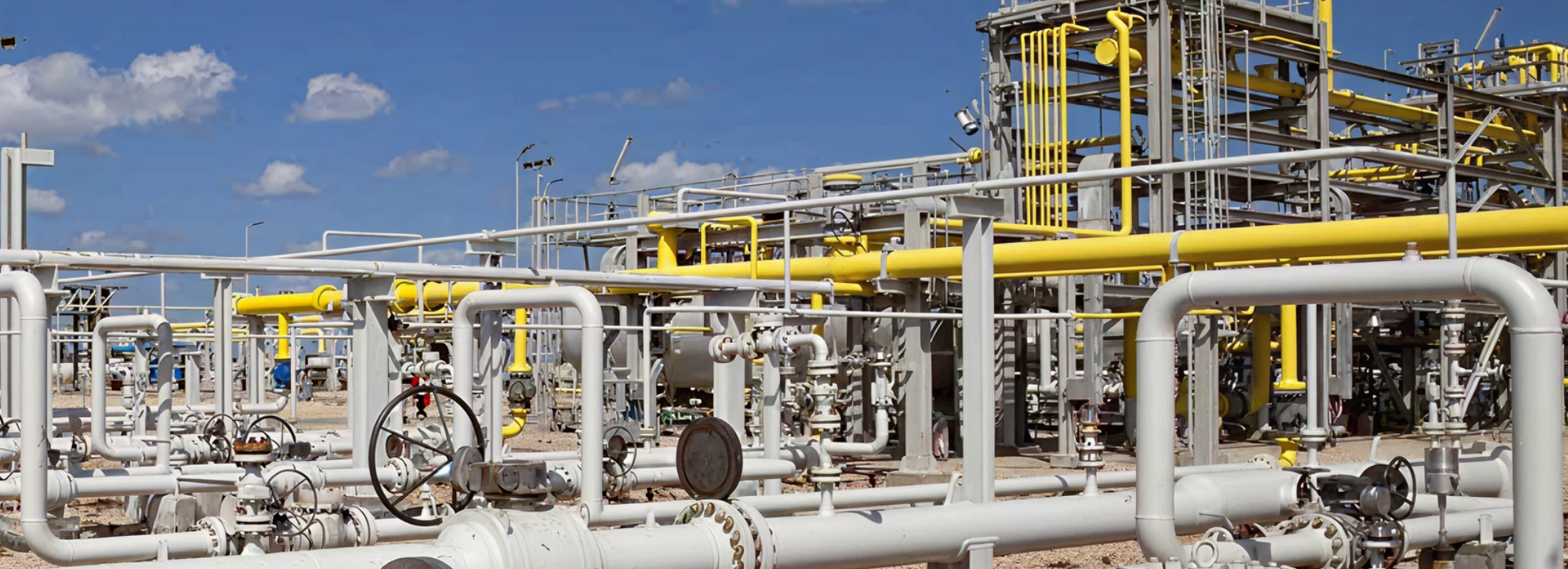

Selective gas treating for CO₂ and H₂S removal
Select from a focused portfolio of generic and specialty amines for gas sweetening applications — backed by technical support, troubleshooting, process review, and solvent-performance guidance.
→
Typical Amine
Gas Sweetening Process
This process flow diagram illustrates a typical amine gas sweetening unit. Sour gas enters the absorber, where countercurrent contact with lean amine removes H₂S and CO₂. The resulting rich amine is regenerated by heat, releasing the absorbed acid gases, and the regenerated lean amine is cooled and recirculated to the absorber.
Actual process configuration may vary depending on feed gas composition, product specifications, solvent selection, and plant design.
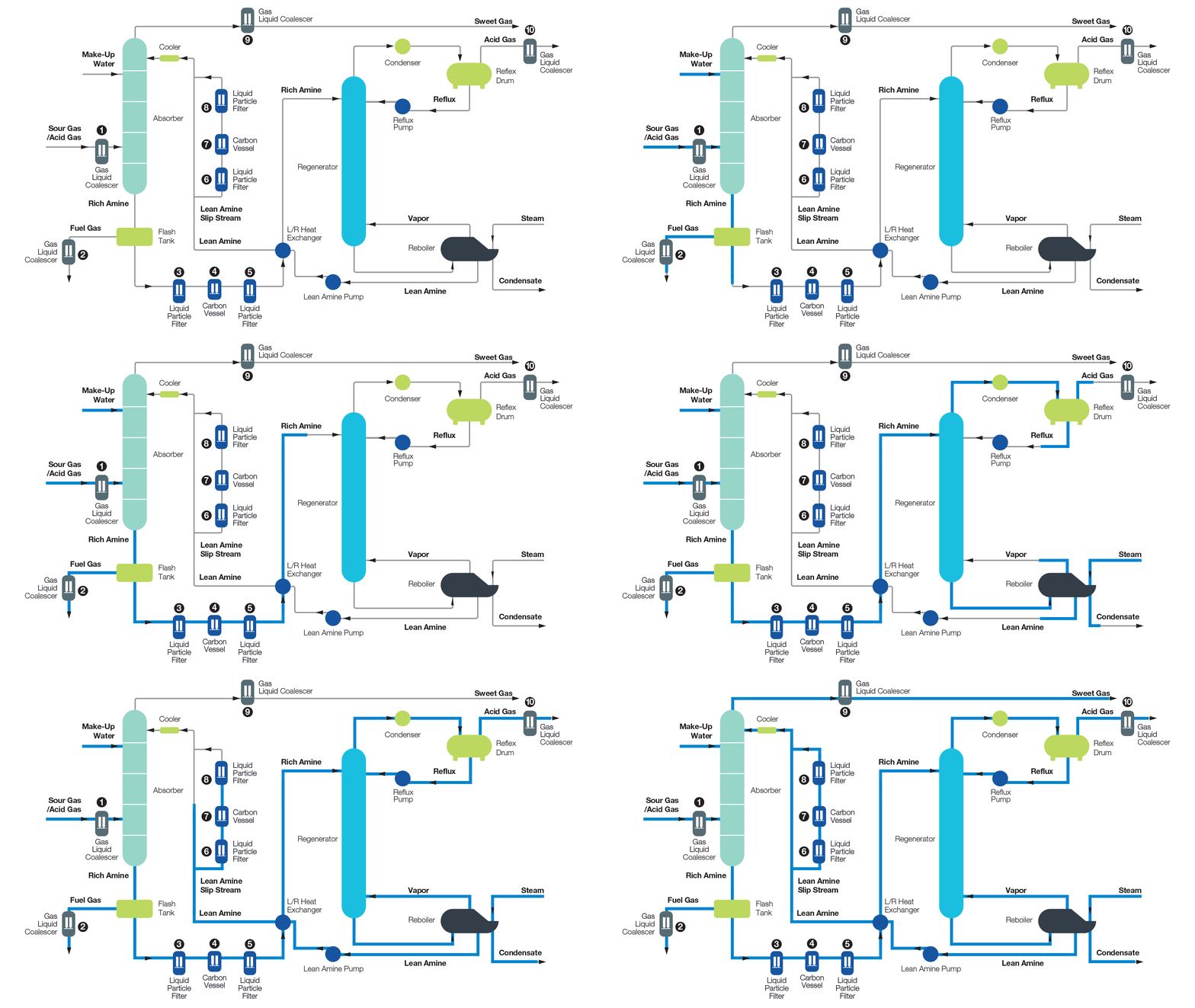

Representative process flow diagram of a typical amine gas sweetening system.

Particularly applicable in operations handling cracked hydrocarbons or gas streams containing hydrogen cyanide (HCN) and ammonia (NH₃).
Typical Amine
Gas Sweetening Process
This process flow diagram illustrates a typical amine gas sweetening unit. Sour gas enters the absorber, where countercurrent contact with lean amine removes H₂S and CO₂. The resulting rich amine is regenerated by heat, releasing the absorbed acid gases, and the regenerated lean amine is cooled and recirculated to the absorber.
Actual process configuration may vary depending on feed gas composition, product specifications, solvent selection, and plant design.
Representative process flow diagram of a typical amine gas sweetening system.


Gas Treating Products
Engineered for Performance
GP GasPack supplies amine solutions and supporting products used in refineries, petrochemical plants, natural gas processing, and related industrial operations.
Our portfolio is designed to support acid gas removal, solvent health, corrosion control, and process reliability with a combination of technical knowledge and commercial responsiveness.

Follow us
Follow us
© 2026 GP GasPack S.A. | All Rights Reserved | Legal Notice | Privacy Policy | Cookie Policy
Experience-Driven Insights

High-level technical perspectives on common gas treating challenges, intended to support understanding and evaluation of potential approaches under varying operating conditions.



Have a Technical Question about Gas Treating?
Ask the Expert
Responses are provided for general guidance purposes only, based on typical operating conditions and experience. They do not constitute specific technical advice or recommendations, and applicability may vary depending on individual system design and operating conditions.

Built on Operational Insight